 18 Aug 2026
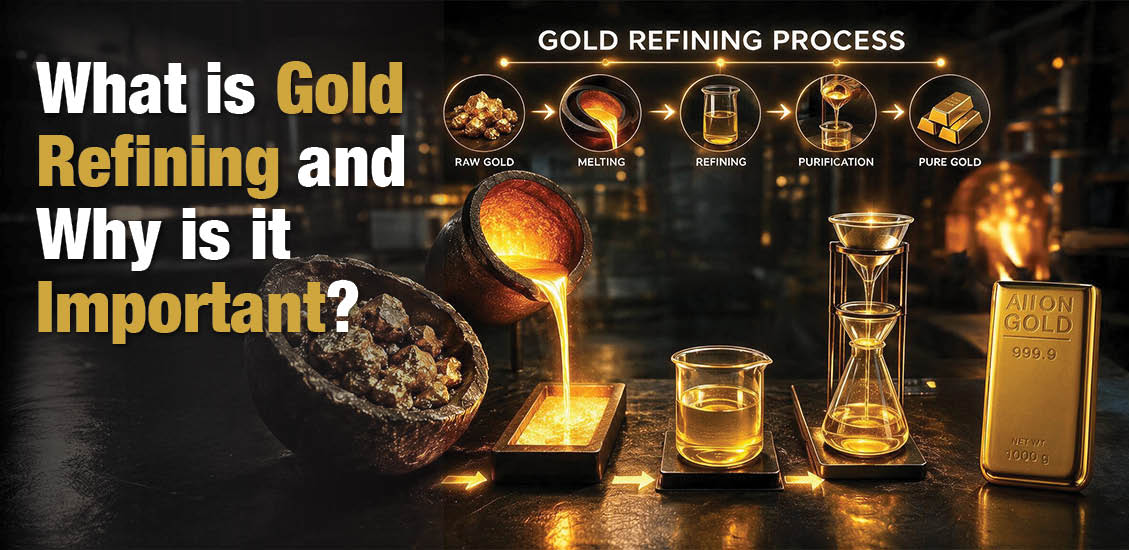
What Is Gold Refining and Why Is It Important?
Gold has always been symbolized as something precious or valuable, but have you ever asked yourself what goes to gold before it becomes the pure form of metal that we use in terms of jewellery and long term gold holdings ?
Gold refining is the process that clears unwanted metals and impurities from gold, forming it purer and more useful. In this blog, we will explore what gold refining is, how it works and how it plays an important role in the gold industry.
What Is Gold Refining?
The term gold refining is a process that we used to remove impurities and isolate gold from other materials and metals. Its goal is to raise the purity of the gold so that it can be utilized for specific applications (application software).
For example: Jewellery which contains gold that is mixed with metals , includes - zinc, copper, silver or palladium. This is often required to make the jewellery powerful and more appropriate for everyday use. However, when the gold needs to be sold, reused or altered into a high-purity/ ultrapure form,
Gold refining can help to separate the valuable gold from these supporting information (additional materials). These processes are also a vital part of Precious Metal Refining.
How Does Gold Refining Work?
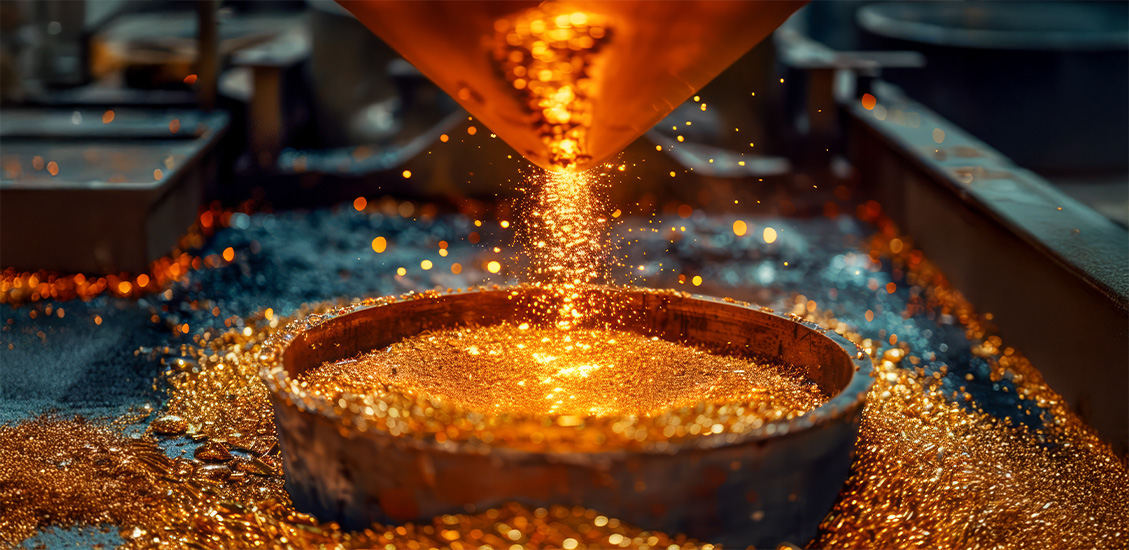
By thoroughly reading these points, you will get a crystal clear idea of how gold refining works.
1. Testing
Before starting the refining approach, material is analysed to figure out its composition. This supports the identification of the approximate amount (rough estimate) of gold and the presence of other metals.
Therefore, accurate testing is useful because the mixture of the material shows how it should be treated.
2. Melting
The gold bearing material (gold ore) melted so that it becomes easier to process and handle. Hence, melting also permits the material to be put together into a more uniform form for additional treatment. This stage is also connected with Gold Processing Company operations.
3. Separation
During the process of refining, gold is separated from other impurities and metals. Multiple techniques can be selected based on the category of material and the target purity.
Whereas, Industrial refining demands carefully controlled conditions and appropriate (suitable) equipment to make sure that valuable metals are recovered effectively.
4. Purification
The gold passes through further purification to remove remaining unwanted or unusable materials. On top of that its major objective is to achieve the reorder level of purity for its intended purpose.
5. Final Testing
After refining, the resulting gold is examined again to confirm its purity. This final testing helps to design the value and quality of the refined material. Moreover, the final testing is also crucial for a Certified Gold Refinery, where quality and purity are important factors.
Conclusion
The chemical process of gold refining is much more than plainly melting gold. Beyond that, this is a carefully controlled process created to separate gold from other improved purity, verify quality, materials and recover valuable metal for the future use. As the hype for gold continues across investment, technology, jewellery and industry, Effective as well as responsible refining plays a vital part of the precious-metals (metals and mining) sector. If gold comes from a mine, an old section of jewellery or a gold holding industrial product, refining helps to change the gold bearing material into a valuable resource that can be used repeatedly.